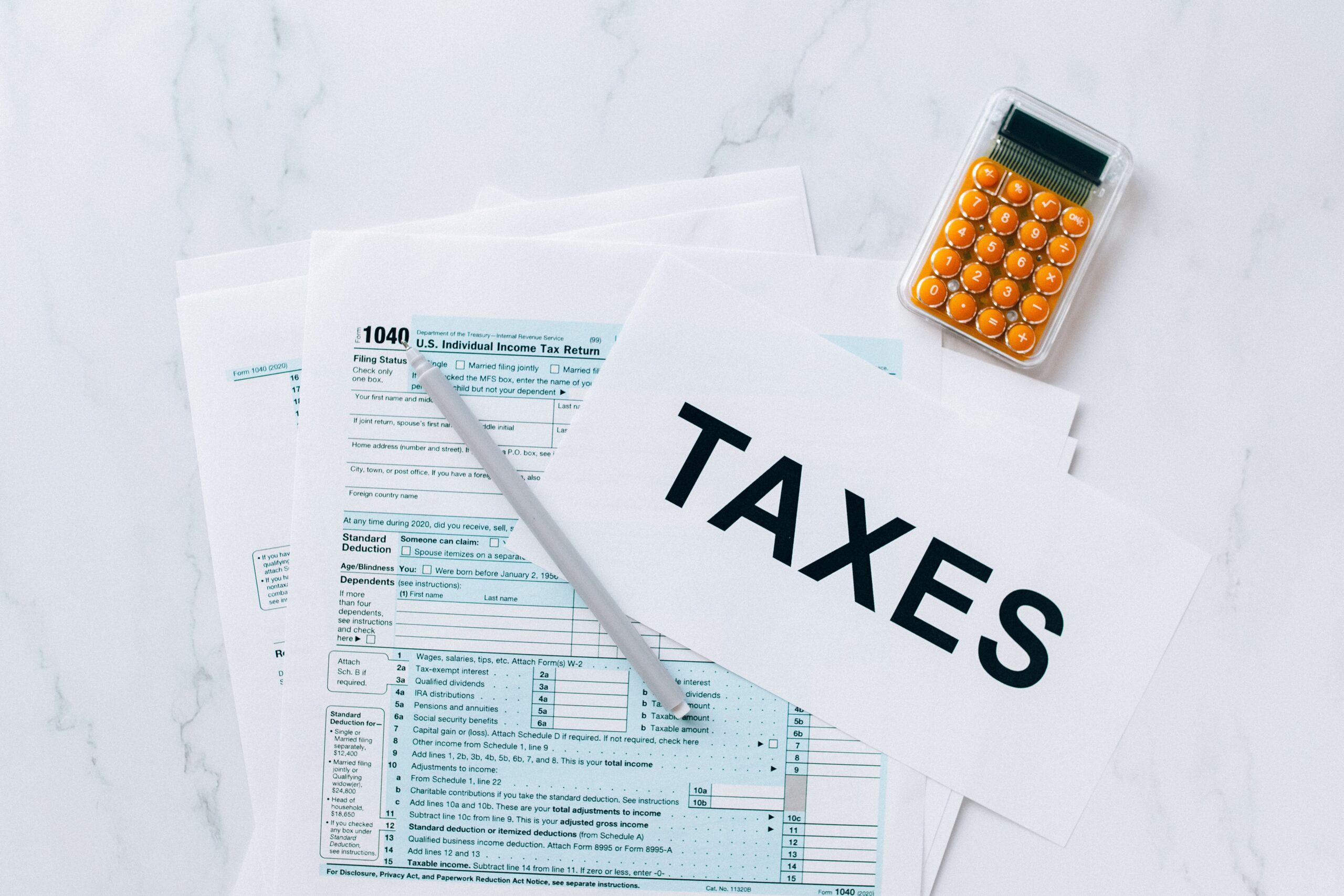
Here’s a rundown of some of the most common tax forms and documents you should be familiar with, updated for the current tax year.
Form 1040: U.S. Individual Income Tax Return
This is the foundational form for most U.S. taxpayers. It’s the annual income tax return that citizens and residents use to report their income, calculate their tax liability, and determine if they’re due a refund or owe more taxes. Since the tax year 2018, the IRS simplified the Form 1040 to a single-page form, with Schedules 1 through 3 used for more complex situations.
-
Standard Deduction: This is a key number for most taxpayers. For the 2024 tax year, the standard deduction is:
-
$14,600 for Single filers and Married Filing Separately.
-
$29,200 for Married Filing Jointly and Qualifying Widow(er).
-
$21,900 for Head of Household.
-
Additional amounts are available for those who are age 65 or older or blind.
-
Form W-4: Employee’s Withholding Certificate
You fill out this form when you start a new job. It tells your employer how much federal income tax to withhold from your paycheck. The modern W-4 is designed to be more accurate, doing away with the old “allowances” system and instead asking for specific information on other jobs, dependents, and other income sources.
Form 1040-ES: Estimated Tax for Individuals
This form is for people who have income not subject to tax withholding, like self-employment income, interest, dividends, or rental income. You use it to calculate and make quarterly estimated tax payments throughout the year to avoid penalties. You generally need to make these payments if you expect to owe at least $1,000 in taxes for the year.
Form W-2: Wage and Tax Statement
Your employer must provide you with a W-2 by the end of January each year. This form reports your annual wages and the amount of federal, state, and other taxes withheld from your pay. You use the information from your W-2 to complete your Form 1040.
Form 1099-MISC: Miscellaneous Income
This form reports various types of income other than wages, salaries, and tips. You might receive a Form 1099-MISC if you earned at least $600 from rent, prizes, or other miscellaneous income. There are many other types of 1099 forms, such as:
-
1099-INT for interest income.
-
1099-DIV for dividends and mutual fund distributions.
-
1099-B for income from securities sales.
-
1099-R for distributions from retirement accounts like IRAs.
The Forms That Help You Complete Your 1040
Schedules 1, 2, and 3
These schedules are attachments to your Form 1040 for reporting additional income, taxes, and credits.
-
Schedule 1: Reports Additional Income (like unemployment compensation, alimony, gambling winnings) and Adjustments to Income (such as student loan interest deduction or self-employment tax deduction).
-
Schedule 2: Covers Additional Taxes (like self-employment tax, household employment taxes, or taxes on IRA distributions).
-
Schedule 3: Lists Additional Credits and Payments (such as the foreign tax credit or education credits).
Schedules A through E
These schedules are also attachments that provide more detail on your income and deductions.
-
Schedule A: Used for Itemized Deductions, which can include charitable donations, state and local taxes paid, and certain medical expenses.
-
Schedule B: Reports Interest and Ordinary Dividends and also requires you to report any foreign accounts and trusts.
-
Schedule C: Reports Profit or Loss from Business for sole proprietors and independent contractors.
-
Schedule D: Used to report Capital Gains and Losses from the sale of assets like stocks or bonds. It separates short-term (held for less than one year) and long-term (held for more than one year) gains and losses.
-
Schedule E: Reports income from real estate rentals, royalties, partnerships, S corporations, and trusts.
Schedule SE: Self-Employment Tax
If you are self-employed, you use this form to calculate the tax you owe for Social Security and Medicare. This is often a surprise for U.S. citizens living abroad who are self-employed, as this tax must be paid on foreign-earned income even if you qualify for the Foreign Earned Income Exclusion (Form 2555). The self-employment tax is 15.3% on your net earnings from self-employment. The good news? You can deduct half of your self-employment tax from your gross income on Schedule 1.
Schedule 8812: Additional Child Tax Credit
If you have qualifying dependent children, you may be eligible for the Child Tax Credit. For 2024, the maximum credit is up to $2,000 per qualifying child, and a portion of it may be refundable. If your income is too low to use the full credit, the Additional Child Tax Credit allows you to receive a refund for up to $1,700 per child. You’ll use this schedule to figure out if you qualify for the refundable portion.
Further details refer IRS site: https://www.irs.gov/forms-instructions